LOGLINE
After being convicted of murdering his pregnant wife, a charismatic attorney becomes one of the most infamous inmates in America. Ten years later, the daughter he never knew survived the attack - an extraordinary young girl named Justice - uncovers evidence that he was framed, sparking a viral movement to free him before the system executes an innocent man... and before time runs out to save her life.
PICTURE OVERVIEW
JUSTICE is a grounded emotional legal thriller about a man condemned by the very system he once believed in, and the daughter who grows up determined to discover whether that system told her the truth.
Marcus Cole was an attorney, a husband, and an expectant father. One ordinary trip to the grocery store ends with him returning home to a nightmare: his pregnant wife, Elena, has been murdered. The evidence that follows turns toward Marcus. Details surrounding their marriage and manipulated evidence make him appear guilty, and the public story hardens long before he can fight it. Marcus is convicted of Elena's murder and sent to prison.
What Marcus does not know is that Elena's unborn child survived. Their daughter, Justice, is raised by Elena's parents, Margaret and Robert. Margaret believes Marcus killed her daughter. Robert has never been able to accept that conclusion so easily. Justice grows up between those two versions of her father.
Ten years later, Justice begins asking questions the adults around her stopped asking. Her curiosity becomes an investigation. Contradictions emerge. A prison photograph of Marcus spreads online, and the case catches fire again in the public imagination. Justice's search brings young attorney Maya Bennett into the fight, and together they begin pulling at a thread that leads far beyond one murder.
Elena had discovered information connected to a powerful network of political figures, financiers, and lobbyists. Witnesses were pressured. Evidence was manipulated. The case against Marcus was not simply wrong; it was shaped.
Then the story becomes painfully urgent. Justice develops a rare blood disorder. Her insurance coverage is canceled, pressure reaches the medical system around her, and the one compatible donor capable of saving her is the father she has never met: Marcus.
To save Justice, the system must temporarily release the man it condemned. Father and daughter finally meet while Maya races to expose the conspiracy that destroyed their family. The transplant succeeds, the hidden financial trail and intimidation begin to surface, and Marcus is ultimately exonerated. The film ends not on revenge, but on survival: Justice beside her free father, holding the document that finally says what she believed - he was innocent.
GENRE / TONE
Legal Thriller / Family Drama / Conspiracy Thriller
The tone is grounded, emotional, suspenseful, and intimate. The conspiracy gives the film scale, but the emotional engine remains simple: a daughter trying to reach her father, and a father discovering that the child he thought he lost has been fighting for him.
MARCUS COLE
Marcus Cole is a charismatic attorney whose belief in law is shattered when the machinery of justice turns against him. He enters the story as a husband and expectant father with a future. He becomes, in the eyes of the public, a convicted murderer.
Prison changes Marcus, but it does not erase him. Ten years of confinement force him to live with Elena's death, the loss of his unborn child as he understands it, and the knowledge that the truth may never matter. His legal training makes his situation especially cruel: Marcus understands exactly how evidence, procedure, public perception, and institutional momentum can close around a defendant.
His arc is not only about proving innocence. It is about becoming a father after believing fatherhood was taken from him. When he learns Justice survived, the case stops being solely about his freedom. His daughter is alive, she needs him, and for the first time in a decade Marcus has something larger than survival to fight for.
JUSTICE COLE
Justice is Marcus and Elena's daughter, saved from the attack that killed her mother and raised by her maternal grandparents. Around nine to ten years old when the central story accelerates, she is unusually observant, persistent, and unwilling to accept an answer simply because an adult says the matter is settled.
Her name becomes the emotional thesis of the film. Justice has grown up in the shadow of a murder, a conviction, and a father she has been taught to understand through other people's memories. Instead of inheriting certainty, she inherits questions.
She begins researching the case herself, using the information available to her to identify contradictions adults have overlooked or abandoned. Her investigation becomes public after Marcus's prison image and story go viral. What begins as a child's search for the truth develops into a movement that forces the country to look at Marcus Cole again.
Justice is not merely a device to save Marcus. Her illness later reverses the relationship: the father she is trying to save becomes the only person who may be able to save her.
ELENA COLE
Elena is Marcus's murdered wife and Justice's mother. Though her death begins the criminal case, her presence continues through the entire story. The truth behind what Elena had uncovered becomes central to understanding why Marcus was framed.
Before her death, Elena had discovered information connected to a network involving political figures, financiers, and lobbyists. That discovery made her dangerous to people with the resources to redirect scrutiny, pressure witnesses, and manipulate the narrative surrounding her murder.
As Maya and Justice reconstruct Elena's final days, Elena evolves from 'the victim in Marcus Cole's case' into the person whose work threatens to expose the architecture behind the crime.
MARGARET
Margaret is Elena's mother and Justice's grandmother. She has spent years believing Marcus murdered her daughter. That belief is bound to grief, protection, and the need to make sense of an unbearable loss.
Margaret raises Justice with love, but Marcus is a wound she does not want reopened. Justice's investigation therefore threatens more than the legal history of the case. It threatens the story Margaret has used to survive Elena's death.
Her journey is emotional rather than investigative. As the evidence changes, Margaret must confront the possibility that the man she blamed for destroying her family may have been another victim of the same crime.
ROBERT
Robert is Elena's father and Justice's grandfather. Unlike Margaret, he has never been fully convinced Marcus was guilty. His doubt does not mean he possesses the answer. It means he has lived for years with the feeling that something about the case never fit.
Robert becomes an important emotional bridge for Justice. Where Margaret wants the old case left alone, Robert understands why Justice needs to know who her father really is.
MAYA BENNETT
Maya Bennett is the young attorney who joins Justice's fight. She brings legal discipline to questions Justice has been pursuing through instinct and persistence.
Maya initially confronts a case that has already been tried, judged, and absorbed into public memory. Reopening it means challenging evidence that once appeared persuasive, locating the pressure points around witnesses, and separating fact from a narrative that has had ten years to harden.
As Maya follows the evidence, the case expands. The manipulation around Marcus's conviction connects back to what Elena had discovered. Maya becomes the adult advocate capable of turning Justice's questions into legal action.
Her role is also protective. As the forces behind the original frame-up become aware that the case is moving again, the fight stops being historical. The same influence that reached Marcus's prosecution begins reaching toward Justice's medical care.
THE CONSPIRACY
The conspiracy behind JUSTICE is not treated as an abstract secret society. Its power comes from influence: money, access, political relationships, pressure, and the ability to make separate decisions appear unrelated.
Elena's investigation had placed her near a network of powerful political figures, financiers, and lobbyists. After her murder, evidence in Marcus's case was manipulated and witnesses were pressured. Over time, Maya and Justice begin identifying financial payments and intimidation that reveal the conviction was built inside a larger effort to bury what Elena knew.
The conspiracy matters because it weaponizes ordinary institutions. The courtroom, public opinion, insurance, and medical bureaucracy can all look legitimate from the outside while individual decisions inside them are being influenced.
ACT I - THE CONVICTION
A Family Before the Fall
Marcus and Elena are expecting a child. Marcus is an attorney with a life built around the law, a profession that has taught him to believe evidence and procedure can lead to truth.
Marcus leaves to get groceries. When he returns, Elena has been murdered. She is pregnant. The discovery destroys the ordinary world Marcus left only a short time earlier.
The Case Turns
As investigators build the case, evidence begins pointing toward Marcus. Information surrounding the marriage and the crime is interpreted in the worst possible light. The prosecution's narrative becomes more powerful than Marcus's insistence that he loved his wife and did not kill her.
Behind the visible case, evidence is being manipulated and witnesses are being pressured. Marcus does not yet understand the scale of what has happened. To him, the nightmare is that the system is making a catastrophic mistake.
Guilty
Marcus is convicted of Elena's murder. The verdict transforms him from grieving husband into public villain. He is sent to prison believing that Elena and their unborn child are both gone.
But the baby survived.
Justice is placed with Elena's parents, Margaret and Robert. Margaret accepts the conviction as the answer to her daughter's murder. Robert does not fully share her certainty.
ACT II - TEN YEARS LATER
The Daughter Who Asks Questions
Justice has grown up with a father who exists mostly as a crime story. At nine to ten years old, she begins digging into the case herself. What starts as curiosity becomes methodical. Dates, testimony, reports, and contradictions refuse to line up as neatly as the adults around her have always claimed.
Margaret wants to protect Justice from Marcus and from the pain of reopening Elena's murder. Robert understands the need to search.
The Image That Changes the Case
A photograph of Marcus in prison reaches the public and goes viral. The image reconnects a human face to a case that had become an old headline. Justice's questions now have an audience.
The renewed attention creates pressure. People begin revisiting the conviction, and Justice's effort becomes larger than a private family investigation.
Maya Bennett
Attorney Maya Bennett becomes involved. Justice has instinct and persistence; Maya has the legal tools to test what Justice is finding. Together they begin reconstructing the case from the ground up.
They uncover indications that Elena had been investigating or had discovered information tied to powerful political and financial interests. The closer Maya gets to Elena's work, the less Marcus's conviction looks like an isolated miscarriage of justice.
ACT III - THE SYSTEM CLOSES IN
The Pattern Behind the Evidence
Maya begins connecting manipulated evidence, pressured witnesses, financial payments, and intimidation. The question changes from 'Did the original case get it wrong?' to 'Who needed Marcus to be guilty?'
For Marcus, the renewed case is almost impossible to trust. He has already watched the system turn certainty into a weapon. Then he receives the truth he never expected to hear: his daughter survived.
Justice Gets Sick
Just as the legal fight gains momentum, Justice develops a rare blood disorder. Her condition creates a second clock. This is no longer only about whether Marcus can be freed before the justice system finishes what it started. Justice herself is running out of time.
The pressure around the family deepens. Justice's insurance coverage is canceled, and members of the medical system face pressure. The reach of the people threatened by the reopened case becomes terrifyingly personal.
The Only Donor
Testing reveals that Marcus is the only compatible donor who can save Justice. The man the state has kept away from his daughter is now the person she needs most.
But Marcus cannot simply walk out of prison and become a donor. Maya must use the reopened case and the medical emergency to force the system to confront an extraordinary contradiction: keeping Marcus confined may cost an innocent child her life.
Father and Daughter
Marcus is temporarily released under the circumstances surrounding Justice's treatment. After a decade of believing his child died with Elena, Marcus finally meets Justice.
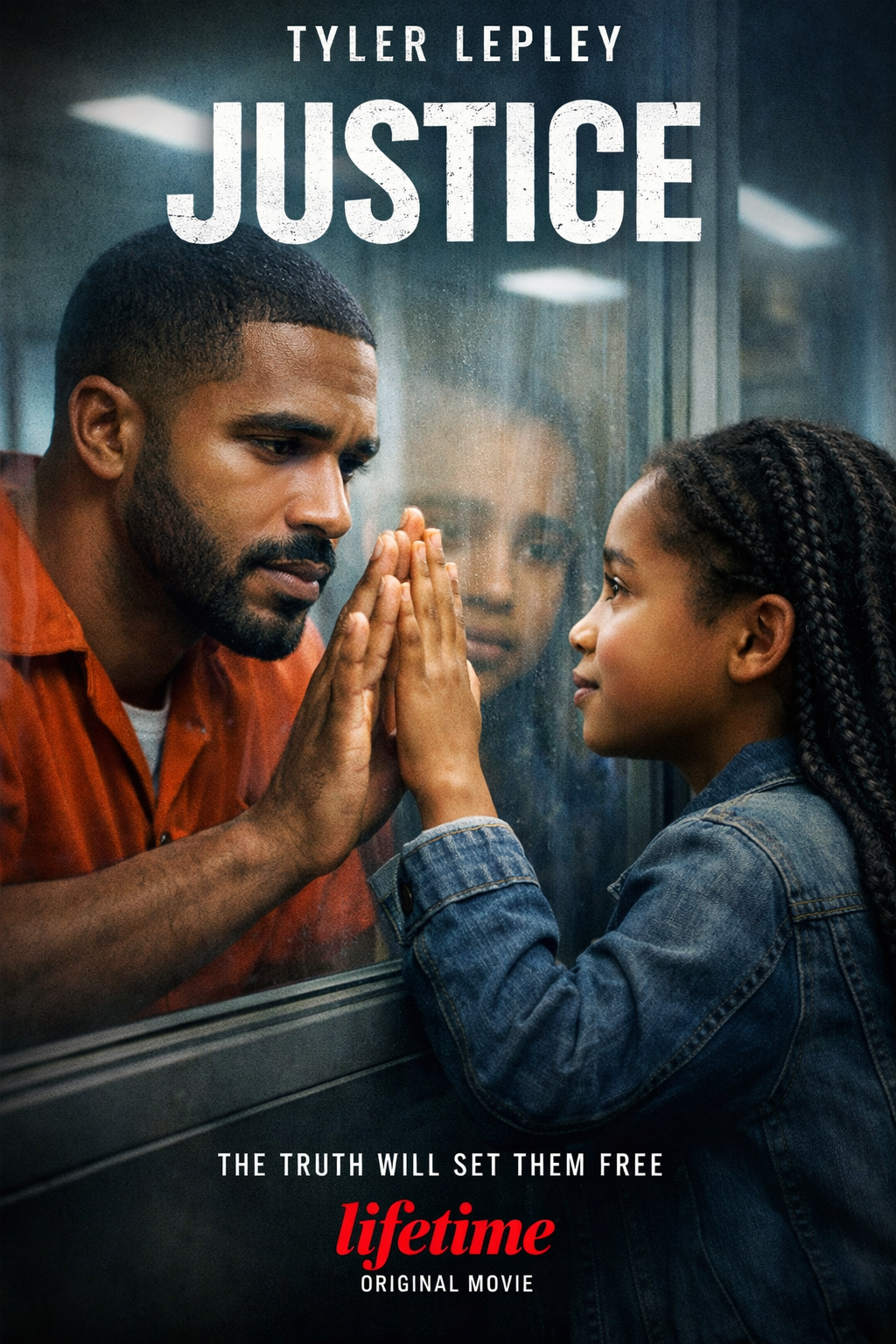
The reunion is the emotional center of the film. Justice has spent years trying to discover whether her father is innocent. Marcus has spent years believing he would never have a daughter to meet. Their first encounter carries ten years of stolen time.
ACT IV - JUSTICE
The Transplant
Marcus donates what Justice needs. The procedure succeeds. For the first time, father and daughter are connected not by a case file, but by something living.
The Truth Breaks Through
Maya's investigation reaches the financial payments, intimidation, and manipulation surrounding Elena's murder and Marcus's prosecution. The structure that kept the original narrative intact begins to collapse.
Marcus is exonerated. The legal victory cannot return Elena or restore the decade taken from him, but it changes the future Justice will inherit. Her father is no longer a convicted murderer in the eyes of the law.
The Reunion Becomes a Life
Freedom does not erase what happened. Marcus and Justice must now build the relationship they were denied. Margaret must live with the knowledge that her grief helped keep Marcus at a distance. Robert's doubts are finally answered. Elena's truth survives through the family she left behind.
THE FINAL IMAGE
Months later, Justice stands outside the courthouse holding Marcus's exoneration document.
The paper matters, but it is not the final emotional image.
Justice sits beside her father, now a free man, and rests her head on his shoulder.
They cannot recover the ten years that were stolen from them.
But they survived.
CORE THEMES
Justice vs. Injustice
The title operates on two levels: Justice is a child, and justice is the ideal every institution in the story claims to serve. The film asks what happens when the person named Justice sees more clearly than the system built to deliver it.
Truth vs. Narrative
Marcus is destroyed not only by evidence but by a story that becomes socially accepted. Justice's investigation demonstrates how difficult it is to reopen a narrative once the public and institutions have decided what happened.
Family After Catastrophe
The murder fractures two generations. The film's resolution is not simply an exoneration; it is the beginning of a family rebuilding itself around the truth.
Institutional Power
The antagonistic force is powerful because it can influence legitimate systems rather than operating outside them. Law, politics, money, insurance, and medicine become battlegrounds.
A Child's Refusal to Accept the Answer
Justice's defining quality is not that she knows the truth from the beginning. It is that she keeps asking questions when everyone else has learned to live with the official answer.
VISUAL LANGUAGE
The visual world should remain grounded and cinematic rather than glossy. Marcus's prison environment is controlled, repetitive, and desaturated in feeling. Justice's world has movement, screens, research, family spaces, and the energy of someone discovering a story in real time. Courtrooms and legal offices should feel institutional rather than theatrical.
As the conspiracy emerges, the film should resist turning visually fantastical. The danger is strongest when influence appears ordinary: a phone call, a canceled policy, a changed statement, a payment, a door that quietly closes.
The father-daughter scenes should become progressively simpler. When Marcus and Justice finally meet, the filmmaking can stop chasing the conspiracy for a moment and allow the emotional reality to occupy the frame.
FINAL NOTE
JUSTICE is ultimately not a story about whether one man can beat a conspiracy. It is a story about a daughter who refuses to let the world define her father without examining the truth for herself.
The legal thriller provides the engine. The conspiracy provides the danger. The medical crisis provides the clock.
But the heart of the film is Marcus and Justice: a father who believed his child was dead, and a daughter who grows up fighting to bring him home.